
William Watson
Businessman, project manager and prolific golf course architect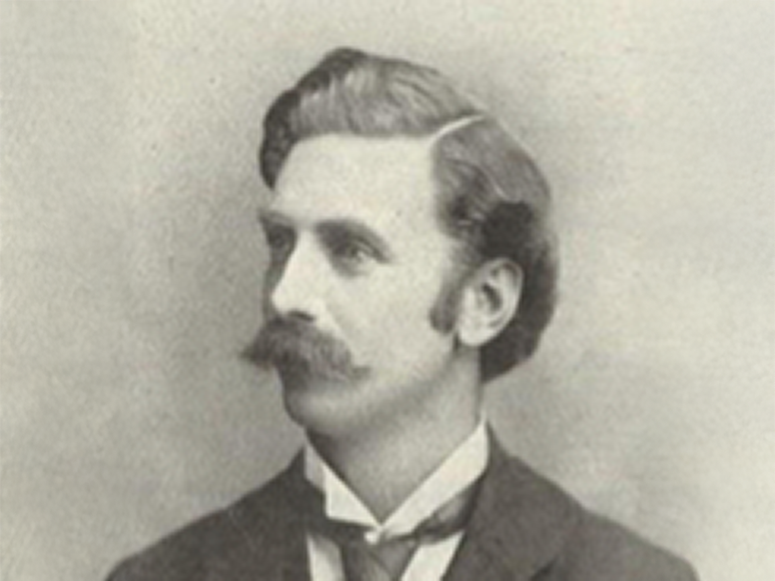
William Watson was a businessman, project manager and one of the most prolific golf course architects in Southern California, and beyond, during the early 1900’s.
Born just 10 miles from the Old Course at St Andrews, Watson would join his father, a member of the R&A, for frequent golf rounds and developed an interest in course architecture. Watson would meet (and impress) an affluent golf tourist from Minnesota who wanted him to travel to Minneapolis and design the first nine holes of what would become The Minikahda Club. In 1898, just shy of 40-years-old, Watson boarded a transatlantic ocean liner for the United States and built what is still today the oldest golf club west of the Mississippi.
Watson didn’t stop his westward travels in Minnesota. One year after finishing his maiden build, he went to Los Angeles and quickly became the preeminent golf architect of the region. Watson’s first design came at the Redlands CC in 1900. That year, he would also build the first-ever nine-hole public golf course in Los Angeles called Garvanza Links. While the course has long since been demolished, a portion of it lives on today as a green grass integration into a Pasadena-area park of the same name.
Watson would open a retail store aimed to sell golf accessories and, in 1901, his father and brother traveled to L.A. to help him operate the business and assist with golf course construction.
In 1906, Watson was hired to build Annandale GC in Pasadena. While on property, he met the caddie master, William. P. Bell, Sr., and mentored the prodigy-to-be, ultimately appointing him to supervise many of his projects. As a result of the experience Bell gained from Watson, fellow renowned architect, George C. Thomas, hired Bell to be his right-hand-man on numerous occasions.
Watson would only live and work in Los Angeles during the winter. In the other seasons, he served as head professional back in Minnesota at The Minikahda Club and traveled the country designing and building other golf courses. Watson’s lifetime portfolio eclipsed 100 golf courses that he either designed or redesigned.
When Watson was 70 years old, the stock market crashed in 1929 and served as a precursor to the Great Depression. Watson’s career was immediately curtailed and his final design, the El Sobrante GC in San Pablo, Calif., was never completed.
Renowned architect, Tod Eckenrode, who redesigned many of Watson’s golf courses said, “Watson utilized the bold, often severe features of existing terrain beautifully in his routings. He wasn’t afraid to play along a sweeping hillside or up and over a ridge. He never practiced a cookie-cutter approach to design.”
The following list of Watson’s projects is from Fried Egg Golf and does not reflect his entire portfolio. Some projects are designs and others are redesigns:
The Minikahda Club (1898), Town and Country Club (1900), Annandale GC (1906), Flossmoor Country Club (1910), Interlachen CC (1911), White Bear Yacht Club (1915), Brentwood CC (1918), Diablo CC (1920), Hillcrest CC (1920), Golden Valley Country Club (1920), Hacienda GC (with Billy Bell, 1920-24), San Diego CC (1921), Virginia CC (1921), Lakeside GC (with Max Behr, 1924), Orinda CC (1924), Belvedere Golf Club (1927), and La Jolla CC (1927).
With Sam Whiting as construction superintendent, Watson laid out two courses at The Olympic Club (1924-27) and TPC Harding Park (1925) and Sonoma GC (1928).